
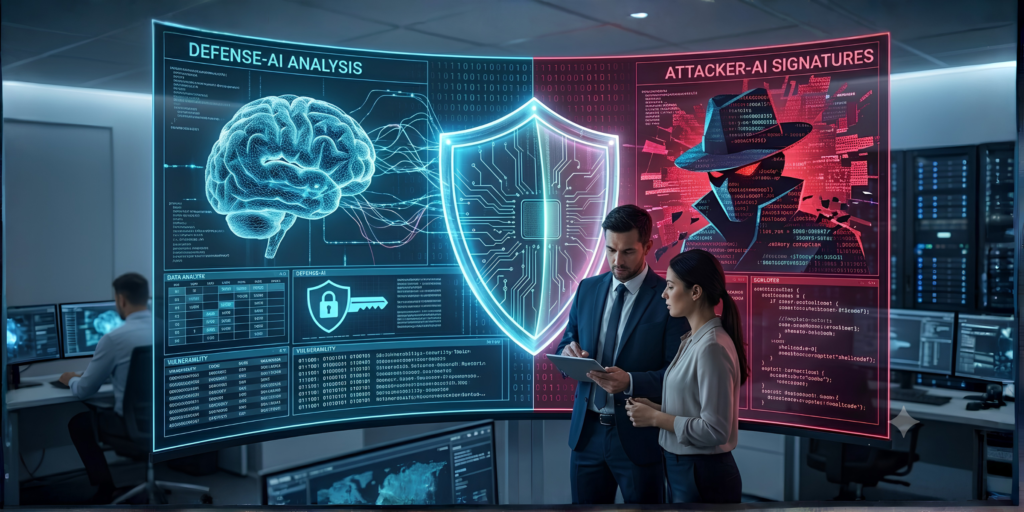
AI Is Transforming Cybersecurity-For Both Defenders and Attackers
Artificial Intelligence is no longer just improving productivity-it is reshaping the cybersecurity landscape. Advanced AI models are now capable of writing code, analyzing vulnerabilities, and automating complex security tasks. While these capabilities empower cybersecurity teams to strengthen defenses, they also provide cybercriminals with powerful new tools to discover and exploit weaknesses faster than ever before.
The cybersecurity industry is entering a new era where organizations must leverage AI not only to improve efficiency but also to stay ahead of increasingly sophisticated threats.
The Rise of AI-Powered Cybersecurity Models
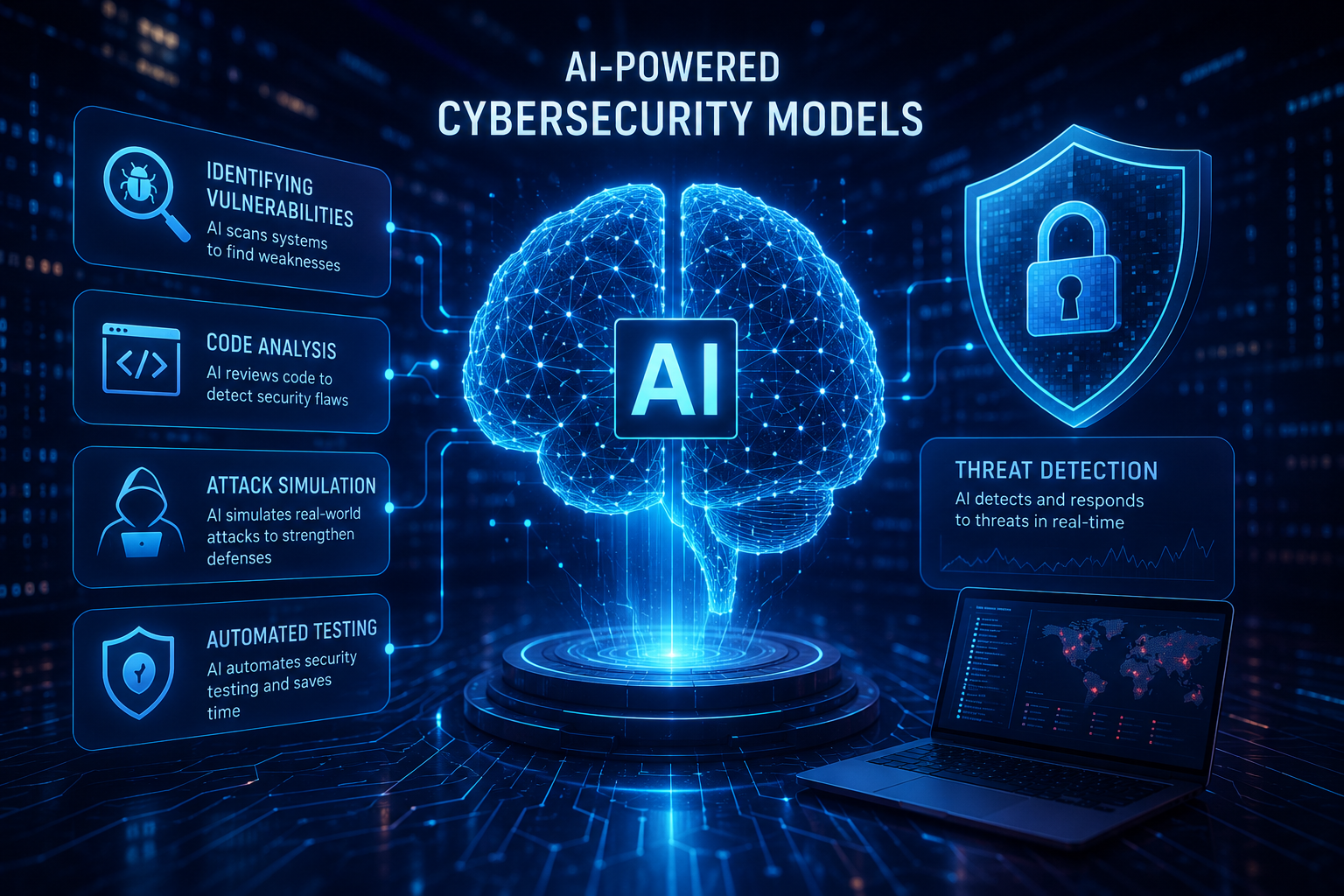
Leading AI companies have begun developing specialized models focused entirely on cybersecurity.
Anthropic introduced Mythos, a cybersecurity-focused AI model initially released to a limited number of organizations. Shortly afterward, OpenAI unveiled its own security-focused model for trusted partners before expanding access. Google has also announced a dedicated cybersecurity AI model currently being tested with selected organizations.
These models are designed to assist security professionals by:
- Identifying software vulnerabilities
- Analyzing source code for security flaws
- Simulating attack scenarios
- Automating security testing
- Accelerating incident response
Instead of replacing cybersecurity experts, AI acts as a force multiplier, allowing security teams to identify and resolve threats much faster.
The Double-Edged Sword of AI
The same intelligence that helps security professionals can also benefit attackers.
Modern AI systems can rapidly analyze applications, generate exploit code, automate reconnaissance, and identify vulnerable configurations. Tasks that previously required hours or even days of manual effort can now be completed within minutes.
This creates a significant challenge for organizations.
As AI lowers the technical barrier to launching sophisticated attacks, businesses can no longer rely solely on traditional security practices. Defensive strategies must evolve at the same pace as offensive capabilities.
Learning from the Past: The Fuzzer Revolution
According to cybersecurity researcher Richard Barnes, today’s AI revolution mirrors the introduction of fuzzing tools nearly a decade ago.
Fuzzers automatically test software by providing unexpected or malformed inputs to uncover hidden vulnerabilities. Initially, these tools made it easier for attackers to discover weaknesses. However, software vendors quickly adopted the same technology to identify and fix vulnerabilities before hackers could exploit them.
Eventually, defensive use of fuzzing significantly reduced successful attacks.
AI presents a similar opportunity.
Organizations that integrate AI into their security operations today will be better prepared against tomorrow’s AI-powered cyber threats.
Why Businesses Must Adopt AI for Defense
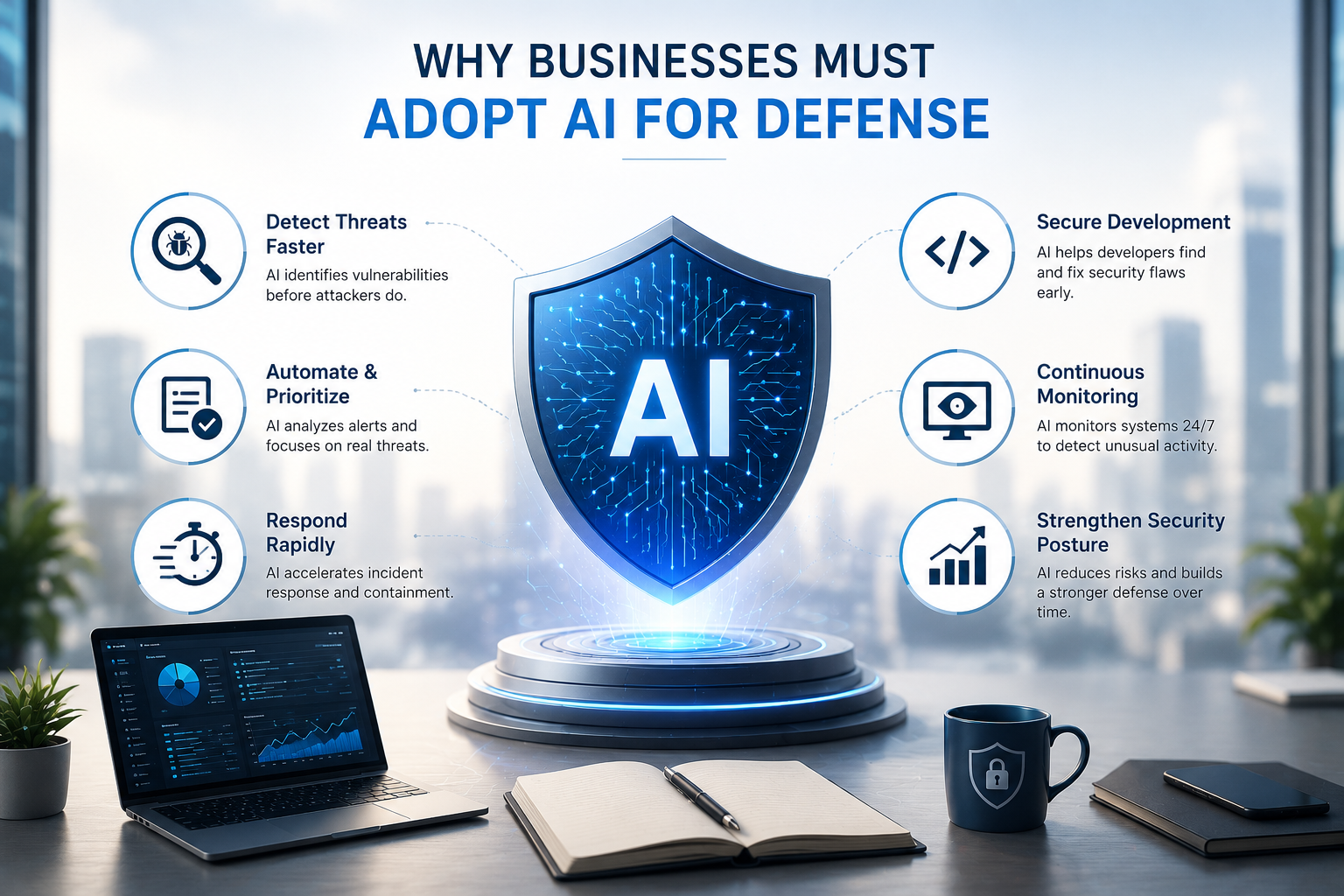
Waiting until attackers fully weaponize AI is not a viable strategy.
Organizations should begin integrating comprehensive IT security solutions to detect vulnerabilities, strengthen defenses, and respond to emerging threats before attackers can exploit them.
- Faster Vulnerability Detection: AI can continuously scan applications, networks, and infrastructure to identify security weaknesses before attackers discover them.
- Automated Threat Analysis: Large volumes of security alerts can overwhelm analysts. AI helps prioritize genuine threats while filtering out false positives.
- Rapid Incident Response: AI-assisted investigation enables security teams to contain attacks faster, minimizing downtime and reducing business impact.
- Secure Software Development: Developers can leverage AI to identify insecure coding practices during development, reducing vulnerabilities before software reaches production.
- Continuous Security Monitoring: AI-powered systems operate around the clock, monitoring networks for unusual behavior that may indicate an ongoing cyberattack.
Preparing for the AI Security Era
Cybersecurity is becoming an AI-versus-AI battlefield.
Attackers are increasingly using intelligent tools to automate exploitation, while defenders are deploying equally advanced AI systems to detect, predict, and prevent attacks.
Organizations that invest in IT network and security solutions are better positioned to defend against evolving AI-powered cyber threats.
Investing in AI-driven security today is not simply about improving efficiency-it is about building resilience against the next generation of cyber threats.
Final Thoughts
Artificial Intelligence is fundamentally changing how cyber threats are discovered, analyzed, and mitigated. Just as previous security innovations transformed defensive strategies, AI is becoming an essential component of modern cybersecurity.
Businesses that proactively integrate AI into their security operations will be better positioned to detect vulnerabilities early, respond faster to incidents, and protect critical digital assets in an increasingly complex threat landscape.
The future of cybersecurity belongs to organizations that use AI not only as a productivity tool but as a strategic security advantage.